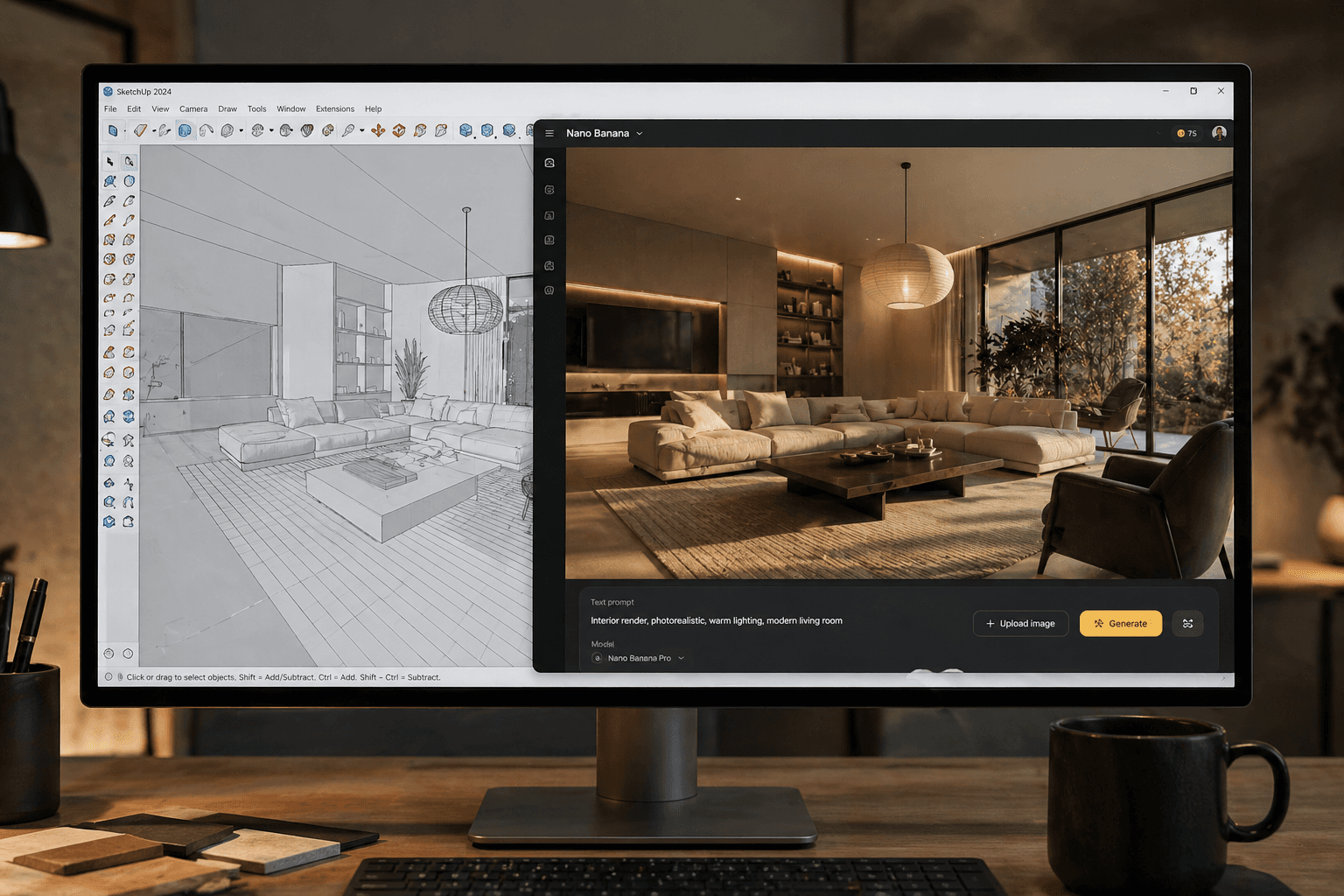
Exploring AI Image Generation in Architecture & Design: Promise, Potential and Reality
Exploring AI Image Generation in Architecture & Design: Promise, Potential and Reality
Exploring AI Image Generation in Architecture & Design: Promise, Potential and Reality
12th January 2026 ~ James Lyons
12th January 2026 ~ James Lyons
Over the past few days I’ve been running a small personal experiment: exploring just how far AI image generation can be pushed within the architecture and design industry, particularly in the context of architectural visualisation, concept design and early-stage idea generation.
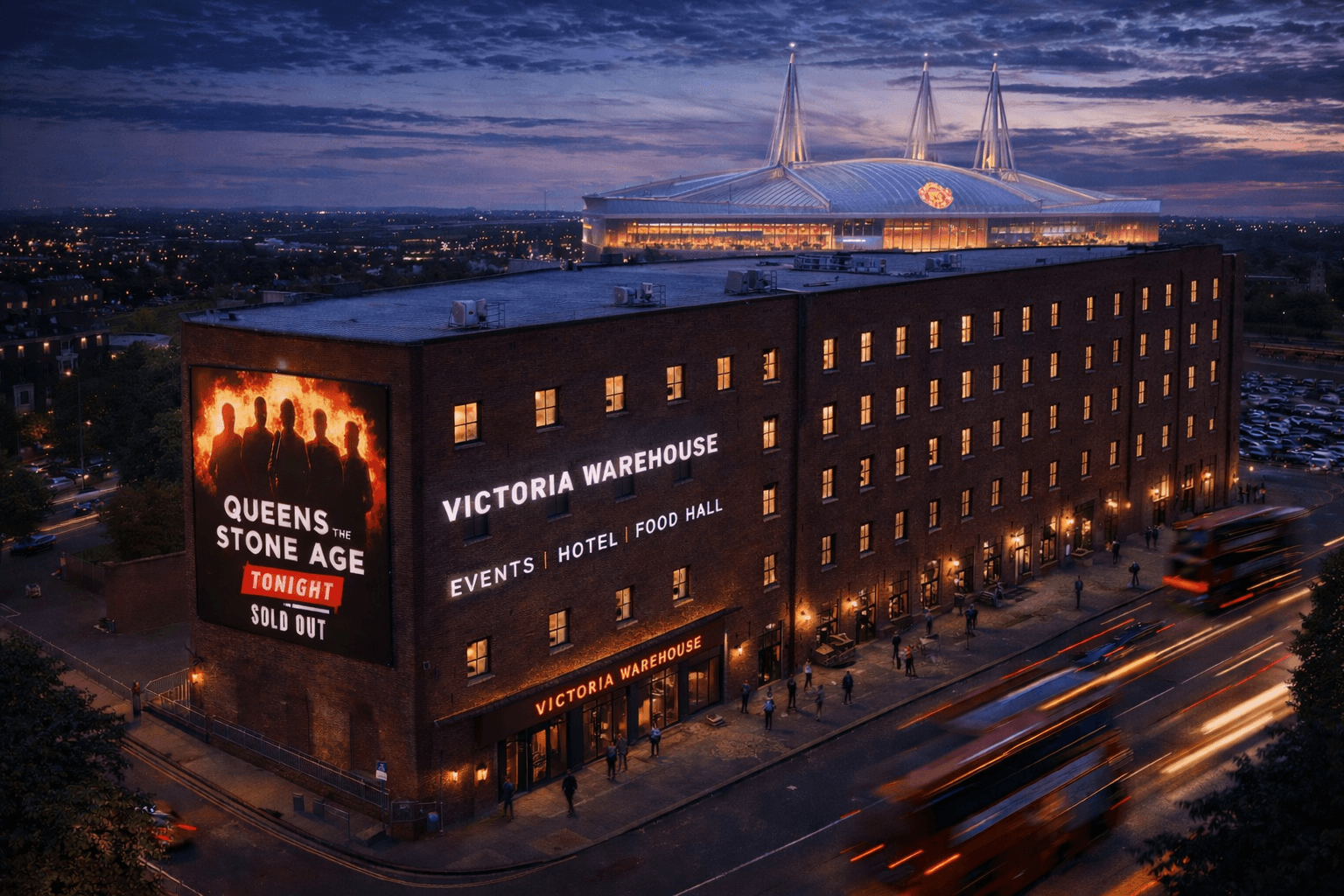
The project centred around a familiar Manchester landmark — Victoria Warehouse — reimagined as an expanded mixed-use venue incorporating additional event spaces, hotel rooms and a food hall, while remaining rooted in its industrial character and real-world context.
What followed was an iterative design conversation between designer and machine — and the results were both exciting and revealing.
Over the past few days I’ve been running a small personal experiment: exploring just how far AI image generation can be pushed within the architecture and design industry, particularly in the context of architectural visualisation, concept design and early-stage idea generation.
The project centred around a familiar Manchester landmark — Victoria Warehouse — reimagined as an expanded mixed-use venue incorporating additional event spaces, hotel rooms and a food hall, while remaining rooted in its industrial character and real-world context.
What followed was an iterative design conversation between designer and machine — and the results were both exciting and revealing.
The Process: Directing AI Like a Design Tool
Rather than treating AI as a one-click image generator, I approached it more like a junior visualisation assistant — giving clear architectural direction, refining feedback, and gradually tightening the brief.
Each step relied heavily on precise instruction, much like briefing a CGI artist or photographer.
Step 1: Establishing Visual Style and Mood
The first instruction focused on visual language rather than form:
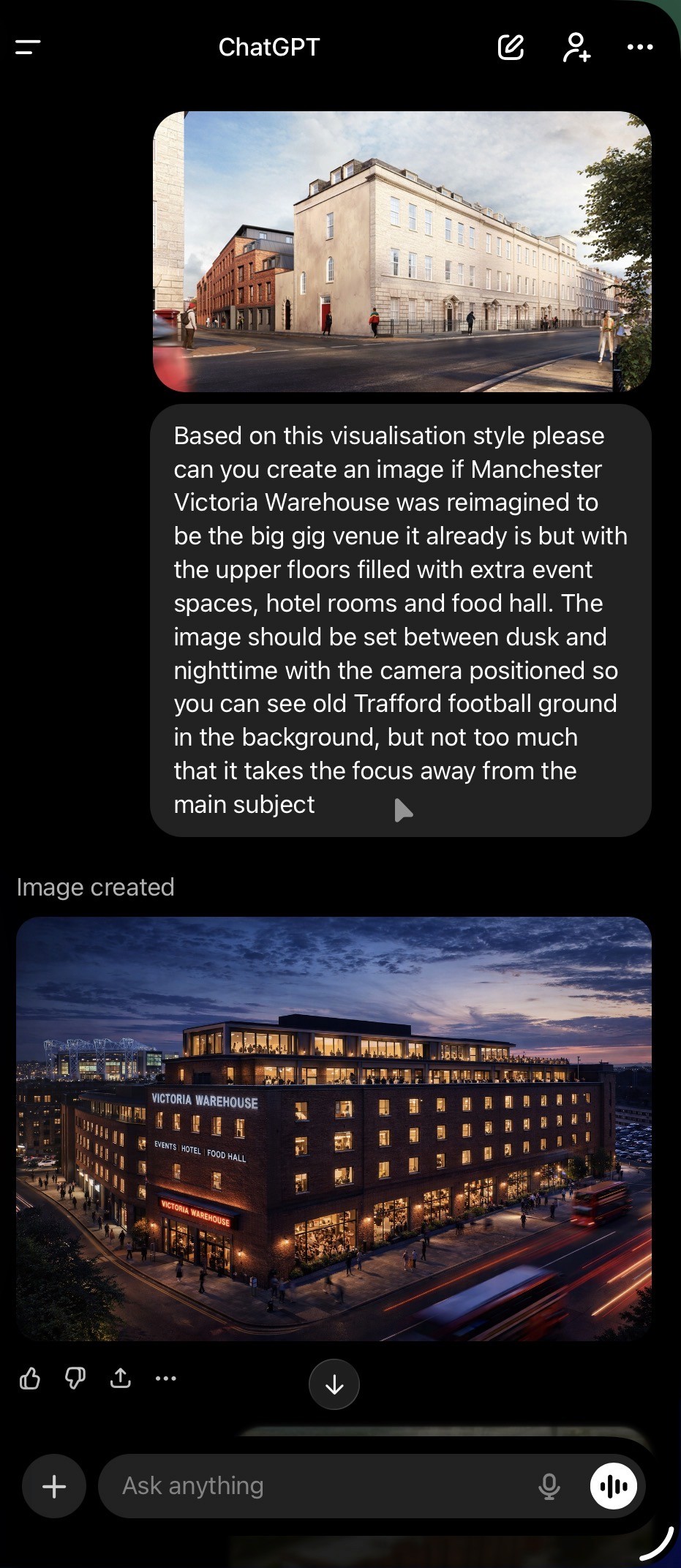
“Based on this visualisation style please create an image of Manchester Victoria Warehouse reimagined as a major event venue. The image should feel realistic, architectural, and set between dusk and nighttime.”
This immediately set expectations around:
• Architectural realism
• Lighting conditions
• Time of day
• Mood and atmosphere
At this stage, the goal wasn’t accuracy — it was tone.
Step 2: Introducing Real Context and Urban Relationships
Once the visual style felt right, the next layer was context.
“Please position the camera so Old Trafford football ground is visible in the background, but not enough to distract from the main subject.”
This was an important test: could AI understand hierarchy in architectural imagery?
The answer was mostly yes — but with some compromises.
The stadium appeared, but scale and perspective required further refinement.
The Process: Directing AI Like a Design Tool
Rather than treating AI as a one-click image generator, I approached it more like a junior visualisation assistant — giving clear architectural direction, refining feedback, and gradually tightening the brief.
Each step relied heavily on precise instruction, much like briefing a CGI artist or photographer.
Step 1: Establishing Visual Style and Mood
The first instruction focused on visual language rather than form:
“Based on this visualisation style please create an image of Manchester Victoria Warehouse reimagined as a major event venue. The image should feel realistic, architectural, and set between dusk and nighttime.”
This immediately set expectations around:
• Architectural realism
• Lighting conditions
• Time of day
• Mood and atmosphere
At this stage, the goal wasn’t accuracy — it was tone.
Step 2: Introducing Real Context and Urban Relationships
Once the visual style felt right, the next layer was context.
“Please position the camera so Old Trafford football ground is visible in the background, but not enough to distract from the main subject.”
This was an important test: could AI understand hierarchy in architectural imagery?
The answer was mostly yes — but with some compromises.
The stadium appeared, but scale and perspective required further refinement.
Step 3: Responding to Architectural Inaccuracies
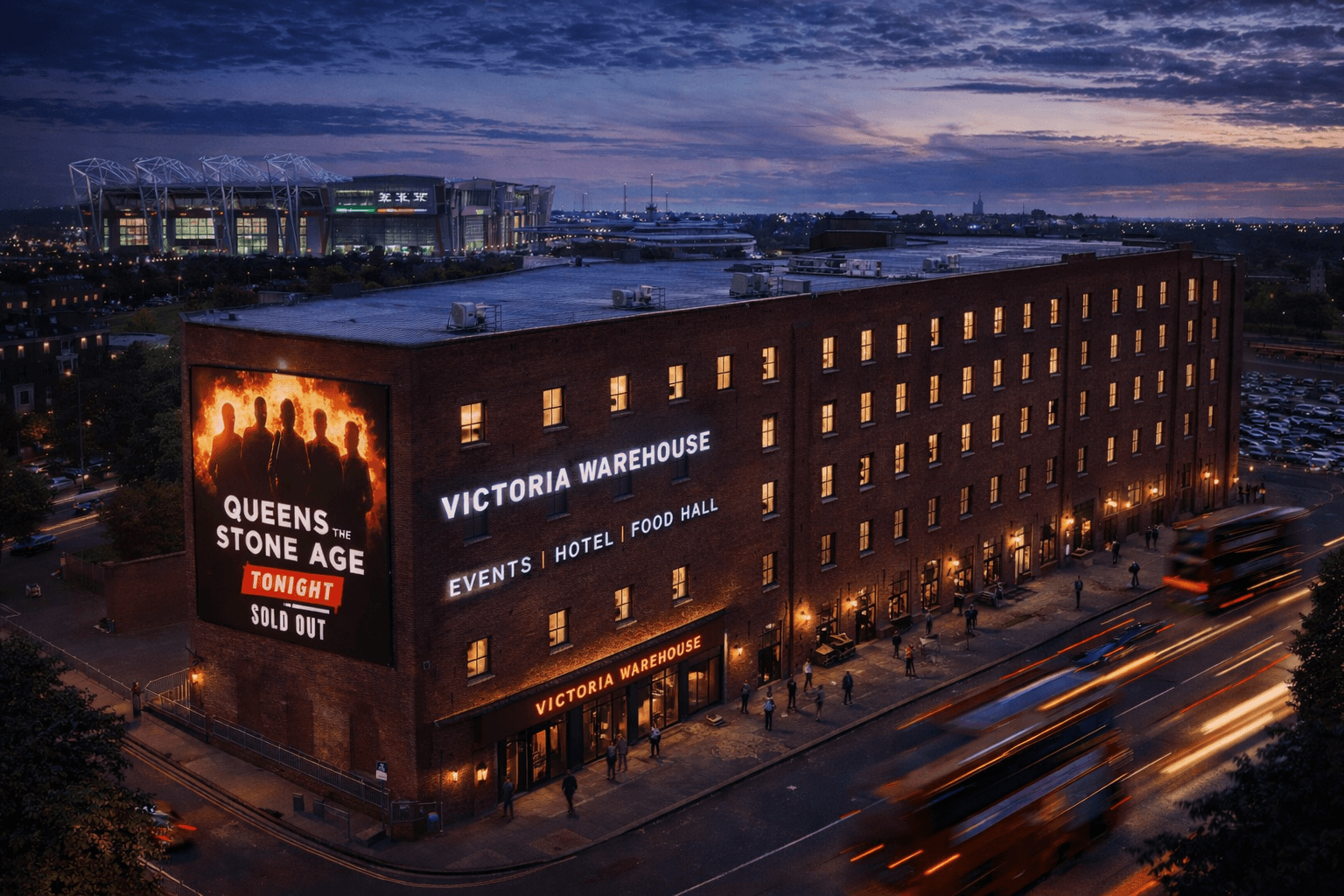
At this point, the biggest weakness became clear: building logic.
Windows drifted. Proportions shifted. The warehouse began to lose its recognisable footprint.
So the instruction became more architectural:
“Please use the attached image to match the existing building shape, architecture and window positions. Keep the footprint and massing consistent with the real Victoria Warehouse.”
This is where AI showed both promise and limitation.
It responded — but not with the precision a professional architectural CGI workflow would deliver.
Step 3: Responding to Architectural Inaccuracies
At this point, the biggest weakness became clear: building logic.
Windows drifted. Proportions shifted. The warehouse began to lose its recognisable footprint.
So the instruction became more architectural:
“Please use the attached image to match the existing building shape, architecture and window positions. Keep the footprint and massing consistent with the real Victoria Warehouse.”
This is where AI showed both promise and limitation.
It responded — but not with the precision a professional architectural CGI workflow would deliver.
Step 4: Speculative Future Context
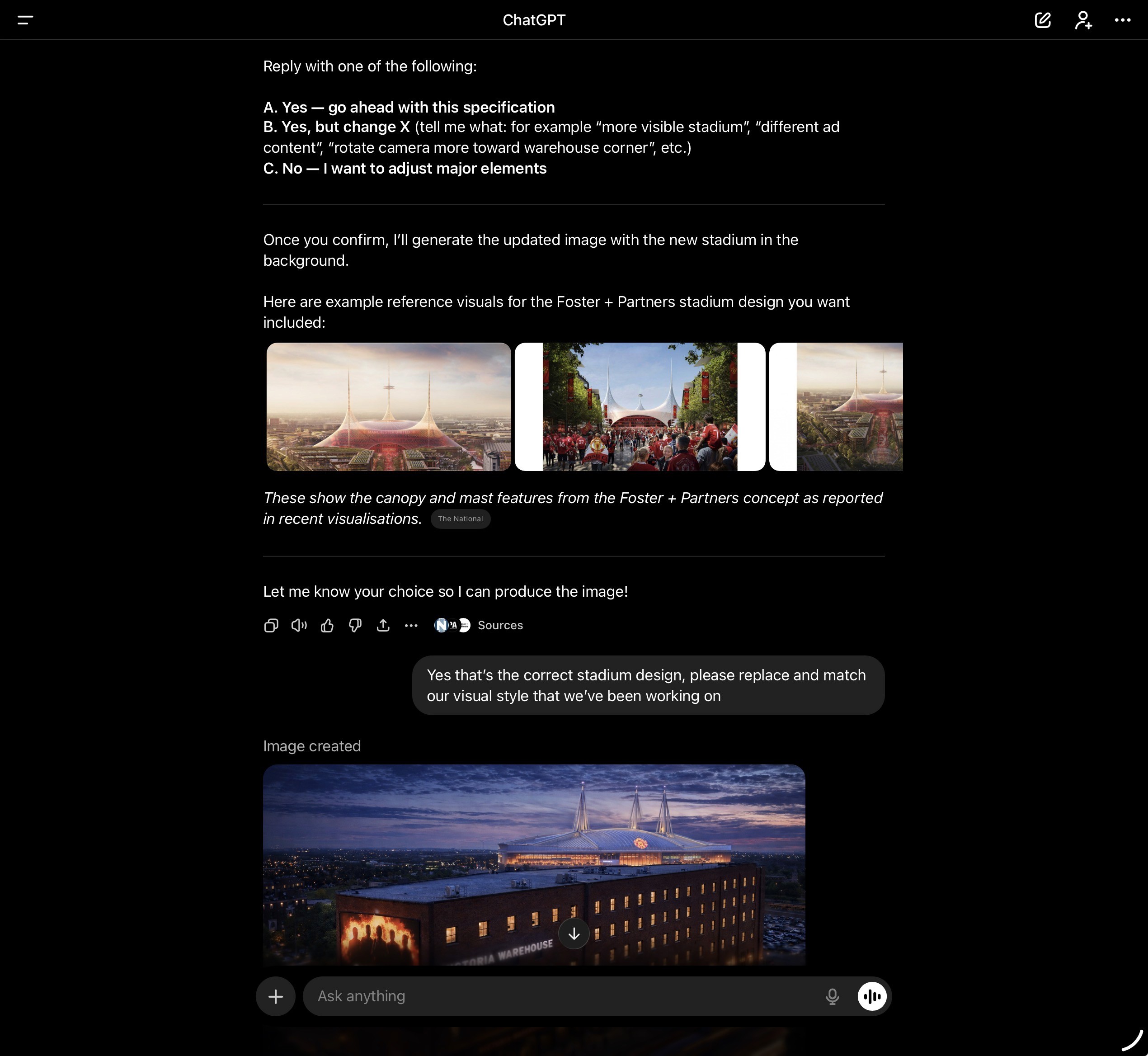
Finally, the experiment moved into speculative territory — swapping the existing stadium for the recently unveiled Foster + Partners Manchester United stadium design.
“Replace the stadium in the background with the new Foster + Partners design, keeping it subtle and secondary to the warehouse.”
This was less about realism and more about future-facing storytelling — something AI is particularly good at.
Step 4: Speculative Future Context
Finally, the experiment moved into speculative territory — swapping the existing stadium for the recently unveiled Foster + Partners Manchester United stadium design.
“Replace the stadium in the background with the new Foster + Partners design, keeping it subtle and secondary to the warehouse.”
This was less about realism and more about future-facing storytelling — something AI is particularly good at.
What AI Does Exceptionally Well
This process highlighted several areas where AI genuinely excels in architecture and design:
Rapid concept visualisation
Lighting and mood exploration
Early-stage architectural ideas
Narrative and atmosphere
Speed of iteration
For concept design, feasibility studies, and early creative thinking, AI is incredibly powerful.
Where It Still Falls Short
However, when compared to a professionally built architectural visualisation, the gaps are obvious:
Inconsistent architectural logic
Poor understanding of real-world constraints
Lack of repeatable design accuracy
No true relationship to drawings, dimensions or construction
These are non-negotiables in real architectural projects — and areas where human expertise still leads.
AI as Part of the Architectural Workflow — Not the End of It
This project reinforced something important:
AI is a tool, not a replacement.
Used well, it accelerates creativity.
Used blindly, it creates believable but unreliable imagery.
For architects, designers and visualisers, the value lies in how we direct it, not what it generates on its own.
Final Thoughts
What we achieved here would have been impossible just a few years ago — and that alone is exciting.
But it also reinforces the value of real architectural visualisation craft: understanding space, proportion, light, context and intent.
AI opens doors. Designers decide where to walk.
What AI Does Exceptionally Well
This process highlighted several areas where AI genuinely excels in architecture and design:
Rapid concept visualisation
Lighting and mood exploration
Early-stage architectural ideas
Narrative and atmosphere
Speed of iteration
For concept design, feasibility studies, and early creative thinking, AI is incredibly powerful.
Where It Still Falls Short
However, when compared to a professionally built architectural visualisation, the gaps are obvious:
Inconsistent architectural logic
Poor understanding of real-world constraints
Lack of repeatable design accuracy
No true relationship to drawings, dimensions or construction
These are non-negotiables in real architectural projects — and areas where human expertise still leads.
AI as Part of the Architectural Workflow — Not the End of It
This project reinforced something important:
AI is a tool, not a replacement.
Used well, it accelerates creativity.
Used blindly, it creates believable but unreliable imagery.
For architects, designers and visualisers, the value lies in how we direct it, not what it generates on its own.
Final Thoughts
What we achieved here would have been impossible just a few years ago — and that alone is exciting.
But it also reinforces the value of real architectural visualisation craft: understanding space, proportion, light, context and intent.
AI opens doors. Designers decide where to walk.